Empower Charge Nurses to Lead Beyond Clinical Expertise
NCharge is a charge nurse training program designed uniquely for first-level supervisory nurses on the unit to help them transition into their leadership role. For nursing teams to thrive, they need strong leadership that can manage the complex day-to-day challenges in every healthcare setting. It takes more than being a strong clinician, it requires people skills that match.
Start the Conversation About NCharge
WHY NCHARGE
Save Money,
Boost Retention
Health systems are grappling with skyrocketing costs from ongoing turnover, reaching a historical high. According to the 2025 NSI report, the average RN turnover now costs a staggering $61k per nurse. Studies show that employees vacate their position due to poor leadership from their immediate supervisor. Investing in a charge nurse training program to help nurses transition from RN to leader increases staff RN retention and reduces overall cost of turnover.
Fuel Confidence
as a Leader
Often, staff nurses are moved to the charge role without any formal leadership training, leaving them feeling unsure in their new role. With nurses moving to the charge role earlier in their career than ever before, they require leadership skill building to become well-equipped, confident leaders. Charge nurses are responsible for staff coordination, managing patient flow, and supporting nurse managers — a broad set of demands that requires deliberate leadership development, not just clinical expertise.
Connecting Generations,
Gen Z to Boomers
With a workforce as diverse as today’s, communication breakdowns and conflicts often disrupt operations. Frontline nurse leaders bear the brunt, needing advanced communication skills to tackle these challenges head-on. Communication training for charge nurses is a core component of leadership development, equipping them to bridge generational gaps, de-escalate tension, and foster a culture of open, effective communication on the unit.


NCharge helps healthcare organizations:
- Build nurse-leader pipeline
- Ensure a smooth transition from peer to leader
- Impact financial awareness and results
- Increase nurse engagement and retention
- Improve patient care and outcomes
Curriculum
Learning Through Real-World Scenarios
NCharge courses are designed to address the everyday challenges that charge nurses face on the hospital unit. These courses focus on essential frontline nursing leadership development and business skills, empowering charge nurses to become vital contributors to your organization’s success.
This nursing continuing professional development activity was approved by Montana Nurses Association, an accredited approver with distinction by the American Nurses Credentialing Center’s Commission on Accreditation. 4 contact hours awarded per course.
1. Leadership Fundamentals for Nurse Leaders
Learning Objectives
- Employ strategies for making a smooth transition from staff nurse to nurse leader.
- Create an individual action plan to identify challenges and maximize opportunities faced in today’s complex hospital environment.
- Enhance individual and unit performance by understanding the various roles of an effective nurse leader.
- Apply best practices for successfully leading a nurse unit.
- Analyze the role of the frontline nurse leader in promoting a quality patient experience.
2. Critical Thinking Skills for Frontline Nurse Leaders
Learning Objectives
- Recognize how developing strong critical thinking and decision-making skills will enhance your effectiveness as a nurse leader.
- Use a decision-making process to make informed decisions when faced with complex situations or challenges.
- Model the essential traits of critical thinkers in your daily work.
- Apply the critical thinking skills of observation, communication, analysis, and inference to make better decisions.
3. Leading Change in a Dynamic Climate
Learning Objectives
- Integrate drivers of the rapidly evolving healthcare
landscape into teammate discussions. - Accurately represent teammates’ individual
responses to change in the work environment. - Implement strategies to improve staff productivity
by facilitating change-related transitions. - Collaborate with staff to improve change-related
transitions impacting quality of care.
4. Supervisory Skills for Positive Outcomes
Learning Objectives
- Explain how improved communication, conflict management, and delegation skills can reduce or prevent patient safety issues and hospital acquired adverse events.
- Apply strategies to effectively communicate when patient safety is at risk.
- Adapt your approach to managing conflict to best fit a specific situation.
- Delegate tasks appropriately while maintaining accountability
5. Employee Engagement and the Patient Experience
Learning Objectives
- Recognize key drivers of employee engagement and the patient care experience.
- Examine the link between employee engagement and patient experience.
- Analyze the role of the charge nurse in promoting employee engagement.
- Assess personal proficiency in promoting employee engagement.
- Employ recognized skills of active listening, service recovery, effective feedback and recognition to improve employee engagement and patient experience of care.
6. Facilitating Interprofessional Teams
Learning Objectives
- Discover the variety of clinical and non-clinical team members who must collaborate to positively impact transitions of care.
- Examine personal tendencies as a team leader and team member in order to foster positive collaboration.
- Compare and contrast behaviors that build trust or damage trust in teams.
- Demonstrate skilled communication and promote interprofessional teamwork by using the GRIP model.
7. Managing Multigenerational Conflict
Learning Objectives
- Recognize the value and challenges of multiple generations working together in today’s healthcare environment.
- Examine ones’ own attitudes regarding various generations and how this impacts team leadership.
- Compare and contrast generational traits and the experiences that have shaped each generation.
- Identify common challenges faced by leaders of multigenerational teams.
- Apply a 3-step framework for communicating effectively and motivating high performance.
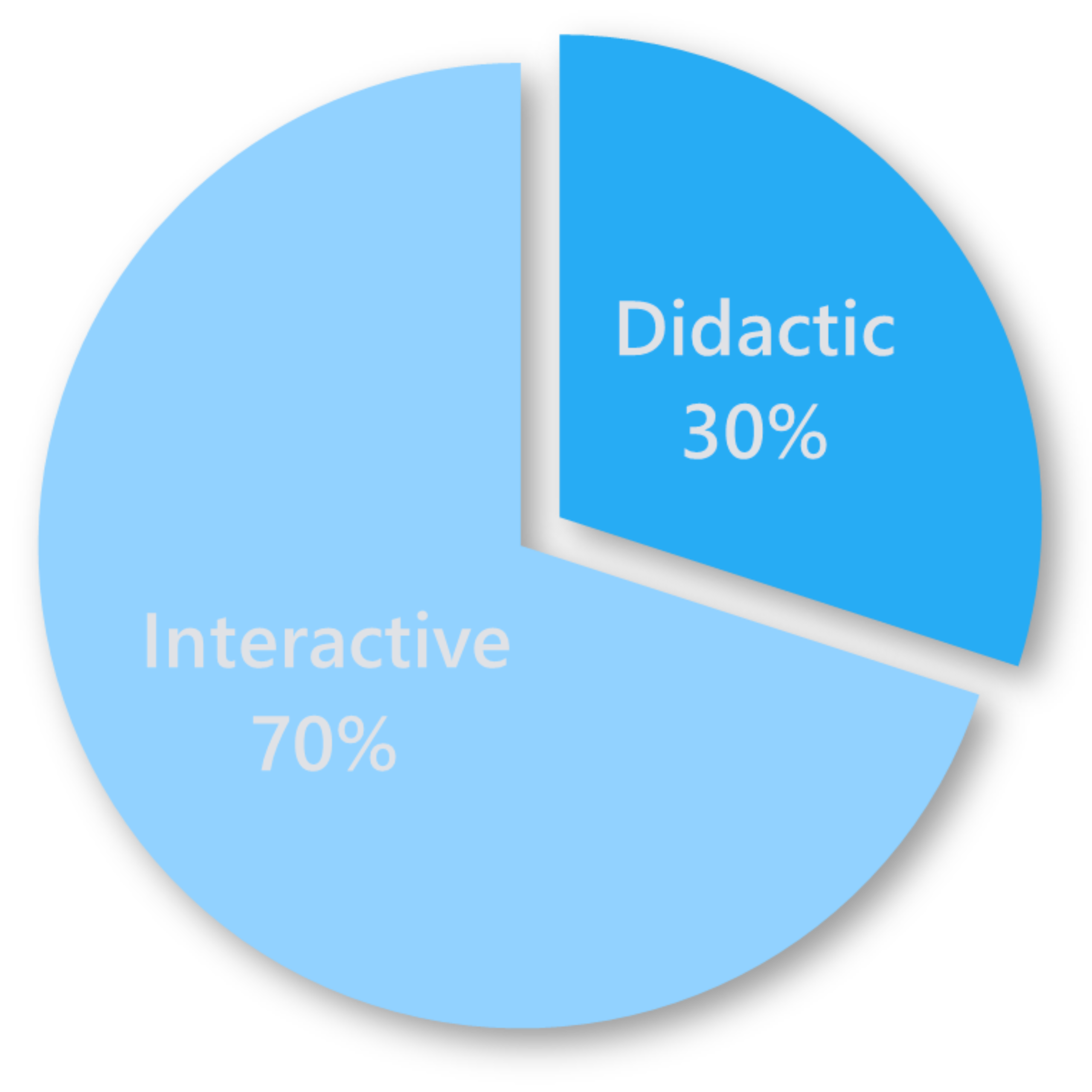
Keeping Learners Engaged
NCharge courses offer a variety of interactive activities, helping learners not only absorb the content but also learn from each other. Nurses engage in role-plays, real-world scenario discussions, video vignettes, and more.
BUILT TO SCALE
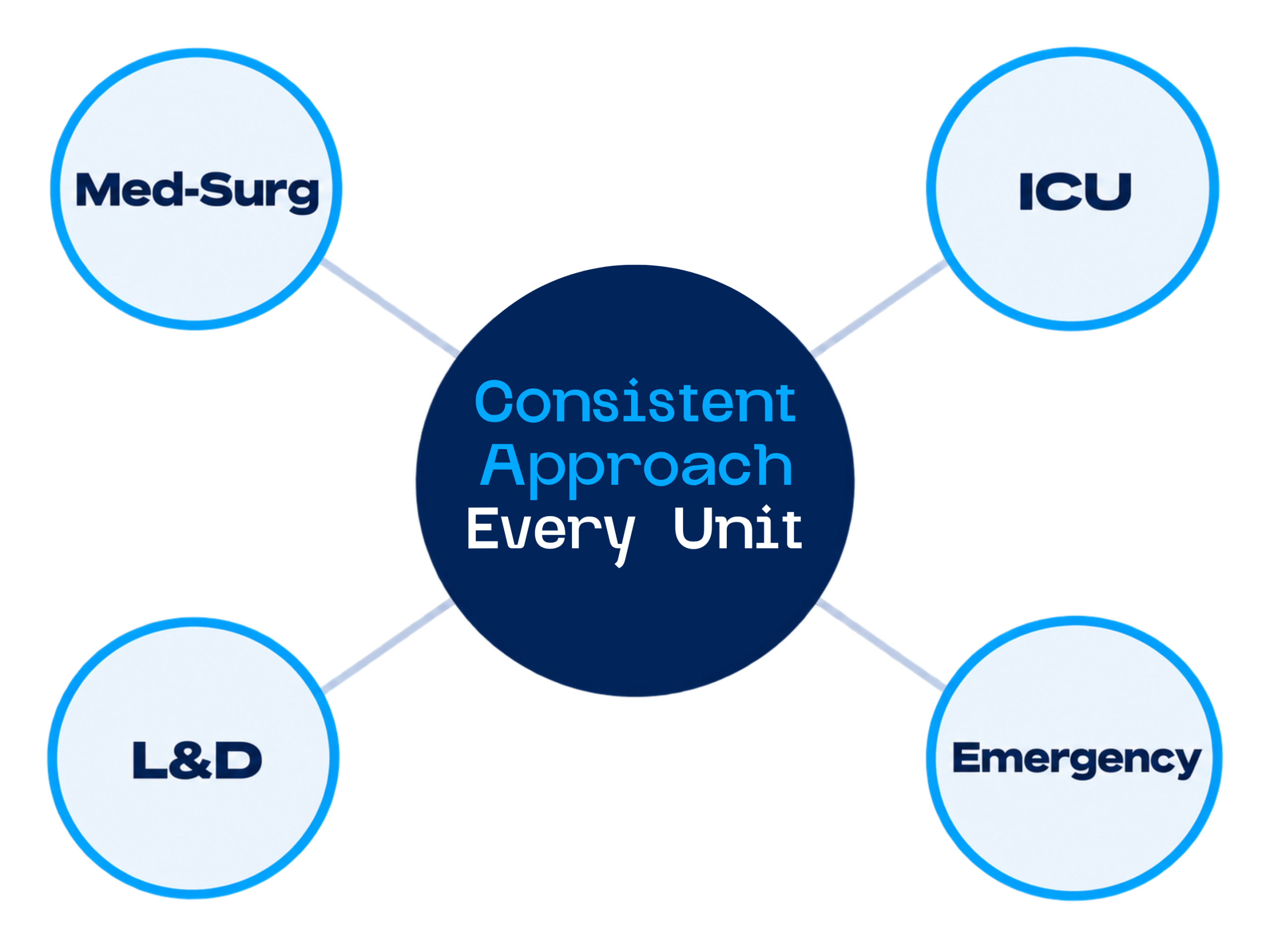
One Program,
Every Unit
NCharge scales with you. Whether you’re upskilling charge nurses at a single hospital or standardizing leadership development across dozens of facilities, the experience, messaging, and outcomes are consistent system-wide.
Train-the-Trainer Model
- Prepare Your Educators: NCharge leverages a Train-the-Trainer (TTT) approach, equipping your educators to expertly teach the courses.
- Interactive Training Sessions: TTT sessions are conducted in an engaging virtual webinar format by our experienced Customer Experience team.
- Comprehensive Instructor Guides: In-depth, high quality Instructor Guides allow for rapid instructor onboarding and seamless course deployment.
Increase employee retention, morale, and quality of service through professional development.

How Fast Can You Launch with NCharge?
Building a leadership program from scratch takes years of curriculum development, vetting, and trial and error. NCharge is ready now. Select your courses, train your educators, and launch your first cohort.
Select Your Courses
Start with one course or all seven. You set your schedule.
Train Your Educators
Our Train-the-Trainer model gets your team ready to teach.
Launch Your First Cohort
Begin training charge nurses on your own timeline.
Organizations can kickoff their first class in weeks, not months.

Delivery Options That Flex to Your Organization
- In-person classroom
- Virtual classroom
Recognize Your Nurse Leaders with NCharge
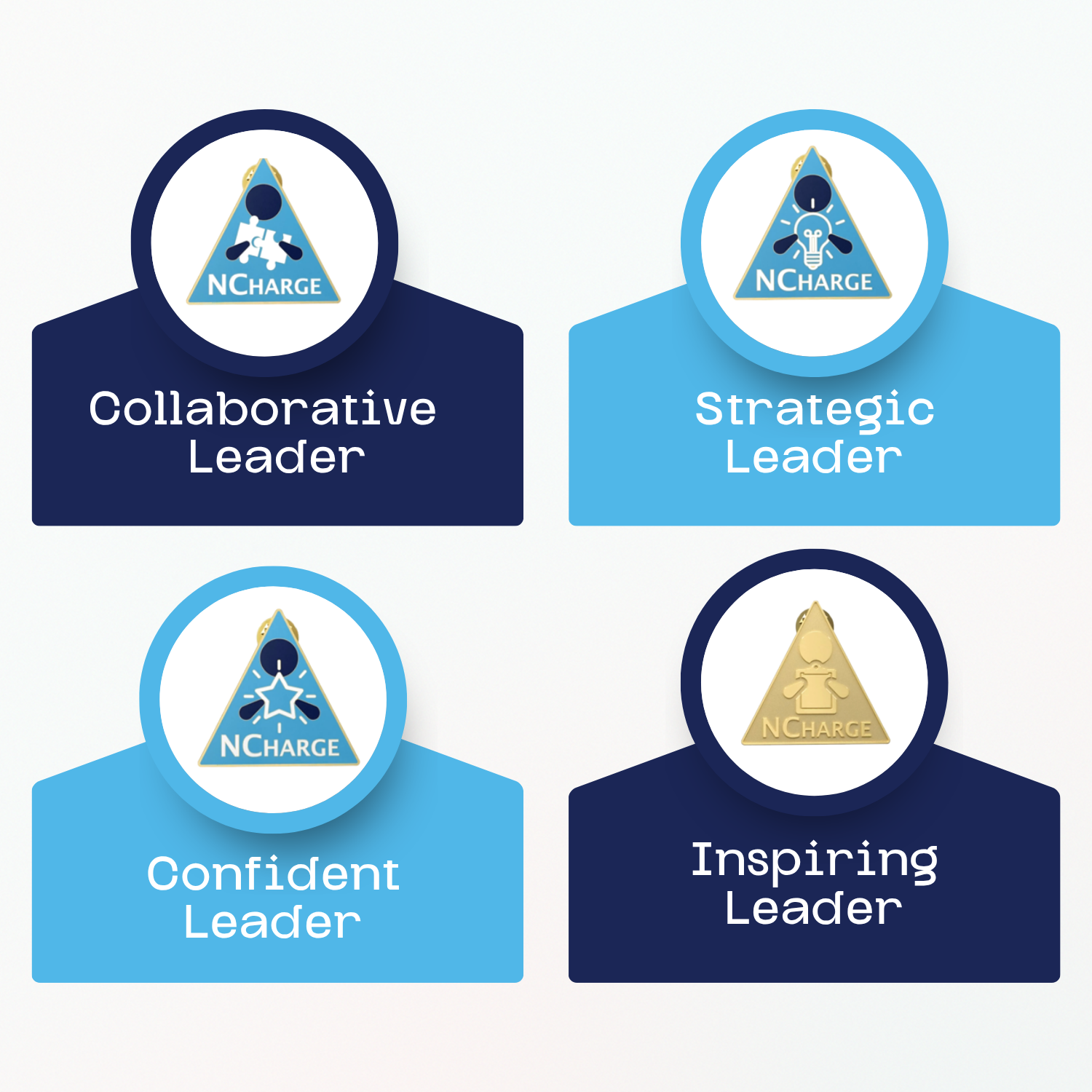
An NIH study study found that when nurses feel recognized by their organization and leaders, it has a measurable, positive impact on engagement and retention. Organizations can also recognize leadership progress through the NCharge Recognition Program, which recognizes charge nurses as they complete key leadership development milestones. The NCharge Recognition Program celebrates charge nurses’ leadership achievements through four tiers:
- Collaborative Leader
- Strategic Leader
- Confident Leader
- Inspiring Leader
Customer Stories



Testimonials
NCharge Supports Your Journey to Magnet and Pathway to Excellence
Magnet and Pathway to Excellence recognition require documented investment in structural empowerment and professional development. NCharge’s ANCC-approved contact hours and completion records can help support that evidence as part of your designation or redesignation application.
FAQs for Charge Nurse
What is a charge nurse?
A charge nurse is a registered nurse (RN) who holds a leadership osition within a healthcare facility, overseeing a specific unit or department. They are responsible for coordinating patient care, managing staff assignments, and ensuring the smooth operation of daily activities.
What does a charge nurse do?
How to become a charge nurse?
How does being a charge nurse benefit the healthcare facility?
What training do charge nurses need?
Hospitals often provide charge nurse training programs to prepare nurses for leadership responsibilities such as staffing coordination, conflict resolution, and patient care oversight. These programs help bridge the gap between clinical expertise and the management skills required in a supervisory role.
Is there a charge nurse certification?
Some healthcare organizations support nurses in pursuing charge nurse certification or leadership credentials. Structured training programs like NCharge help prepare nurses for these responsibilities by developing the leadership, communication, and decision-making skills that certification pathways require.
Get In Touch to Learn More About NCharge
