
Sutter Health is the nation’s 10th largest not-for-profit health system and is comprised of 57,000 employees, including more than 15,000 nurses. The organization serves 3.5 million people each year and cares for 1 out of every 100 Californians. Sutter Health’s mission is to prioritize patients’ care above all, while consistently supporting and valuing their people. Destination 2030 is Sutter’s roadmap to achieving their bold vision “to be the most comprehensive, integrated and connected health system for getting and staying well”.
Cultivating the Next Generation of Nurse Leaders
The organization’s Destination 2030 has five strategic pillars, one of which is to “be the best employer in the nation”. To achieve this goal, Sutter has expanded professional development across the system. The organization invests in professional development opportunities to expand leadership development programs to help employees take control of their own careers. Sutter partnered with Catalyst Learning on a leadership development initiative for frontline nursing leaders for charge nurses. The two-year rollout began in February 2024.

Jim Benney, chief nurse executive at Sutter’s CPMC in San Francisco, says, “Transitioning from peer to leader is one of the most complex steps in a nurse’s professional journey.” He adds, “We recognized that for charge nurses to truly lead effectively, they needed more than just responsibility—they needed context, purpose and skill. Our goal was to help them understand the ‘why’ behind our expectations, so they could lead with confidence and clarity.”
Value of Scenario-Based and Peer-to-Peer Learning

Shannon Wagner, a clinical nurse educator III at Sutter’s Eden Medical Center in Castro Valley, Calif., recognizes that charge nurses “are the backbone of unit-level leadership,” and said participants “have responded with overwhelming enthusiasm and gratitude … many have expressed that, for the first time, they feel truly seen and supported in their leadership roles.”
Wagner shared that the real-world scenarios, case studies, interactive discussions and peer collaboration included in the NCharge program have been particularly impactful. “Charge nurses shared that walking through actual, relatable situations have helped them bridge the gap between theory and practice. They appreciated working through real-life leadership challenges such as handling conflict, making tough staffing decisions and navigating patient care escalations. One of the most valuable aspects has been the opportunity to learn alongside charge nurses from other hospitals. Exchanging experiences and strategies across different settings has given them fresh perspectives and solutions they wouldn’t have encountered otherwise.”
The NCharge program introduces frontline nursing leaders to the financial, operational and patient experience aspects of leadership, which the charge nurses had not previously been exposed to. Wagner notes that “unlike generic leadership training, [NCharge] acknowledges that charge nurses operate in a fast-paced, high-pressure environment where they are expected to be both clinical experts and team leaders – often without formal leadership preparation.” She also shared that “learning how their roles influence hospital-wide outcomes has shifted their mindset from task managers to strategic leaders”.
Building My Toolbox, Expanding My Network
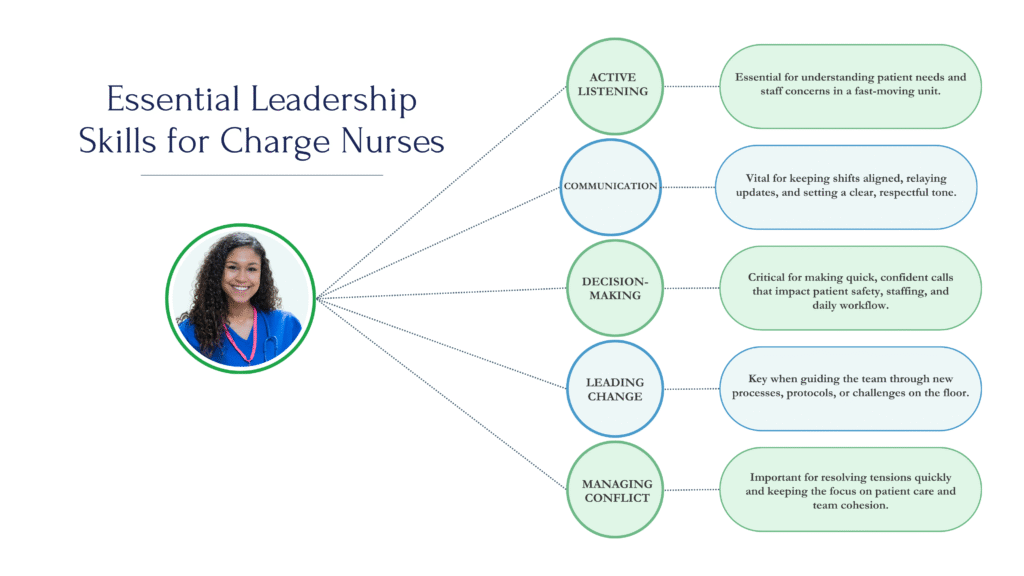
Jennifer Lucero, RN, a charge nurse in the Neonatal Intensive Care Unit at Sutter CPMC’s Van Ness campus, says, “Attending the NCharge program last year, I had the opportunity to add some tools to my toolbox as far as being Charge on my unit and as a leader.” She notes understanding the business aspects of hospital operations, generational differences, anticipating change, being inclusive and creating a culture of belonging were all highlights of the program. “I think others have noticed”, Lucero says. “I’m able to slow down,be an active listener and empower my colleagues. I’m more confident as a Charge RN and trust my decisions on issues on the unit.”
Mary Ann Borja, RN and charge nurse in behavioral health at Sutter’s Alta Bates Summit Medical Center – Herrick campus in Berkeley, Calif., says the NCharge program has strengthened how she prioritizes patient care assignments with each RN’s level of experience. The program has also helped in communicating with multiple generations on her unit, and “learning my own strengths and weaknesses.” Borja says that “teamwork and communication” have strengthened as a result.
Mary Saur, RN and charge nurse in the med-surg unit at Sutter CPMC’s Mission Bernal Campus and Orthopedic Institute in San Francisco, says, “I have learned to communicate with my coworkers effectively,” particularly as she transitioned from peer to leader within her unit. Saur shares that the group activities within the NCharge program facilitated her learning and confidence, “The other nurses [in the class] gave me a lot of encouragement and pushed me to be better”.
Lucero and Borja shared that a highlight of the program was meeting different charge nurses from across the Sutter system,which included sharing stories and learning how to navigate certain situations as well as expanding their professional network. All of the charge nurses shared that they were able to apply what they learned on their units and would highly recommend the program to other charge nurses.
Shaping the Future of Sutter Health
Wagner says, “The transformation has been remarkable. At the start, many charge nurses expressed uncertainty in their roles, focusing mostly on day-to-day logistics and survival rather than leadership … many felt like they had been thrust into the position without proper preparation.” Now, “charge nurses have expressed they feel more self-assured in their decision-making, more proactive in advocating for their teams with leadership and more strategic in their leadership approach. They are critically thinking about long-term solutions instead of reacting, and they are trying to become more involved outside of their units, as well”.
Benney echoed Wagner’s observations on the NCharge’s impact, saying, “we’ve seen a noticeable shift. Our charge nurses now report feeling more equipped to handle difficult conversations, manage team dynamics, and reinforce priorities around quality, workflow and patient-centered care.”
Investing in the professional development of frontline nursing leaders, Sutter is realizing its Destination 2030 strategy to be the “best employer in the nation and the best place for nurses to grow”. Benney emphasizes its importance: “It’s one of the most valuable investments you can make. While leadership development does require time and resources, the returning engagement, retention, overall team performance and patient satisfaction, is immeasurable. You’re not just training leaders; you’re shaping the future of your organization.”
Writer: Joyce K. Borgfeld, DNP, RN, NE-BC